
Dead Reckoning Rum
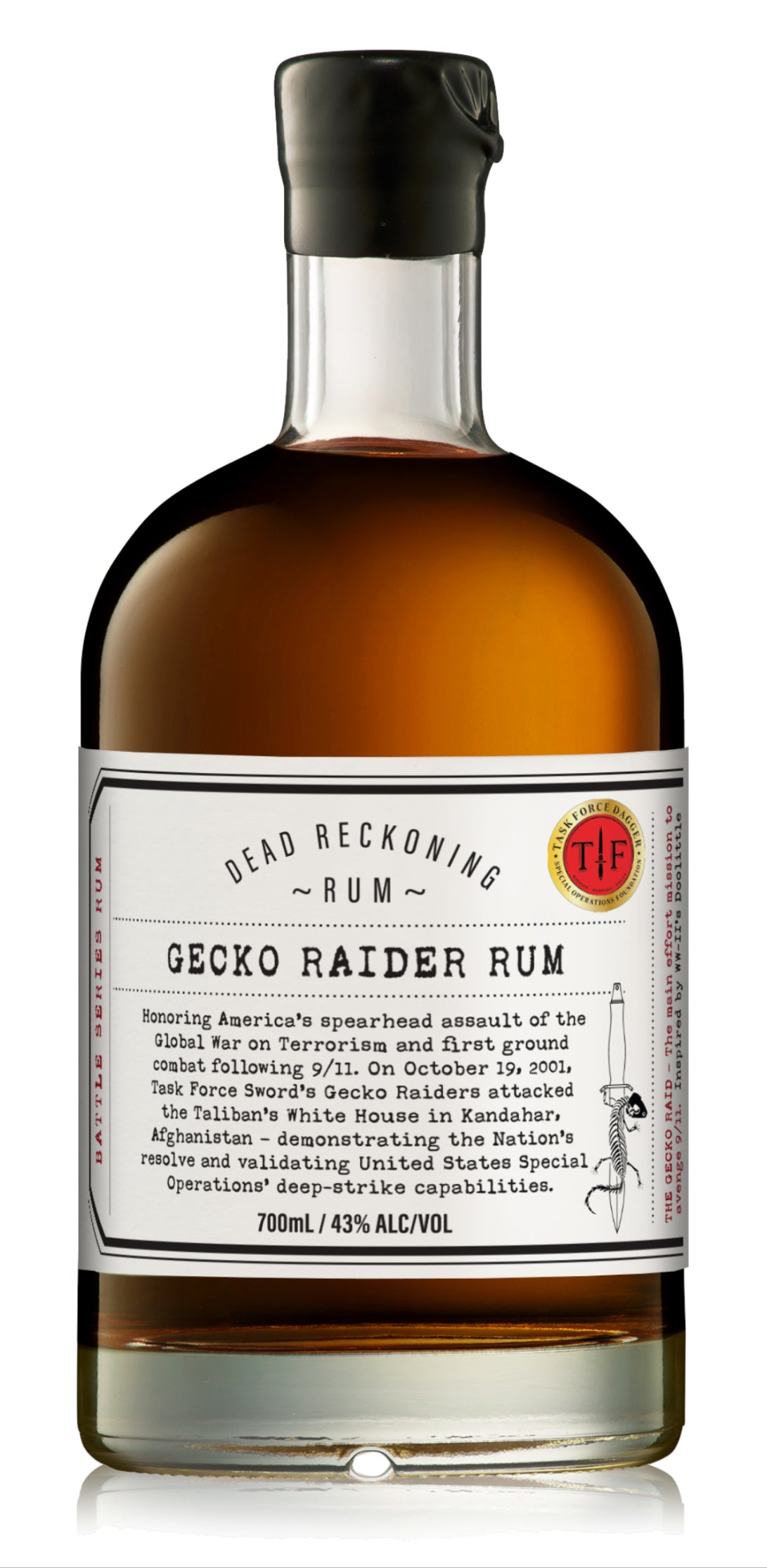
DEAD RECKONING Gecko Raider Rum
DEAD RECKONING Gecko Raider Rum
Couldn't load pickup availability
50% of all profits from the sale of each bottle will be donated to task force dagger special operations foundation helping veterans & families in need
On 19 Oct 2001, a Special Operations Task Force executed a presidentially directed high-risk raid into southern Afghanistan to avenge the attacks of 9/11 and signal to Al Qaeda and their Taliban hosts that the United States will go anywhere to protect the homeland and its citizens. This would be America’s spearhead assault of the Global War on Terrorism (GWOT) and the Department of Defense’s first ground combat action in Afghanistan.
This daring raid took place 21-years after the 1980 disaster at landing zone (LZ) Desert One in Iran during Operation Eagle Claw – the ill-fated attempt to rescue Americans being held in Tehran. Subsequent Congressionally mandated special operations force development and post 9/11 national expectations made this a ‘no-fail mission’.
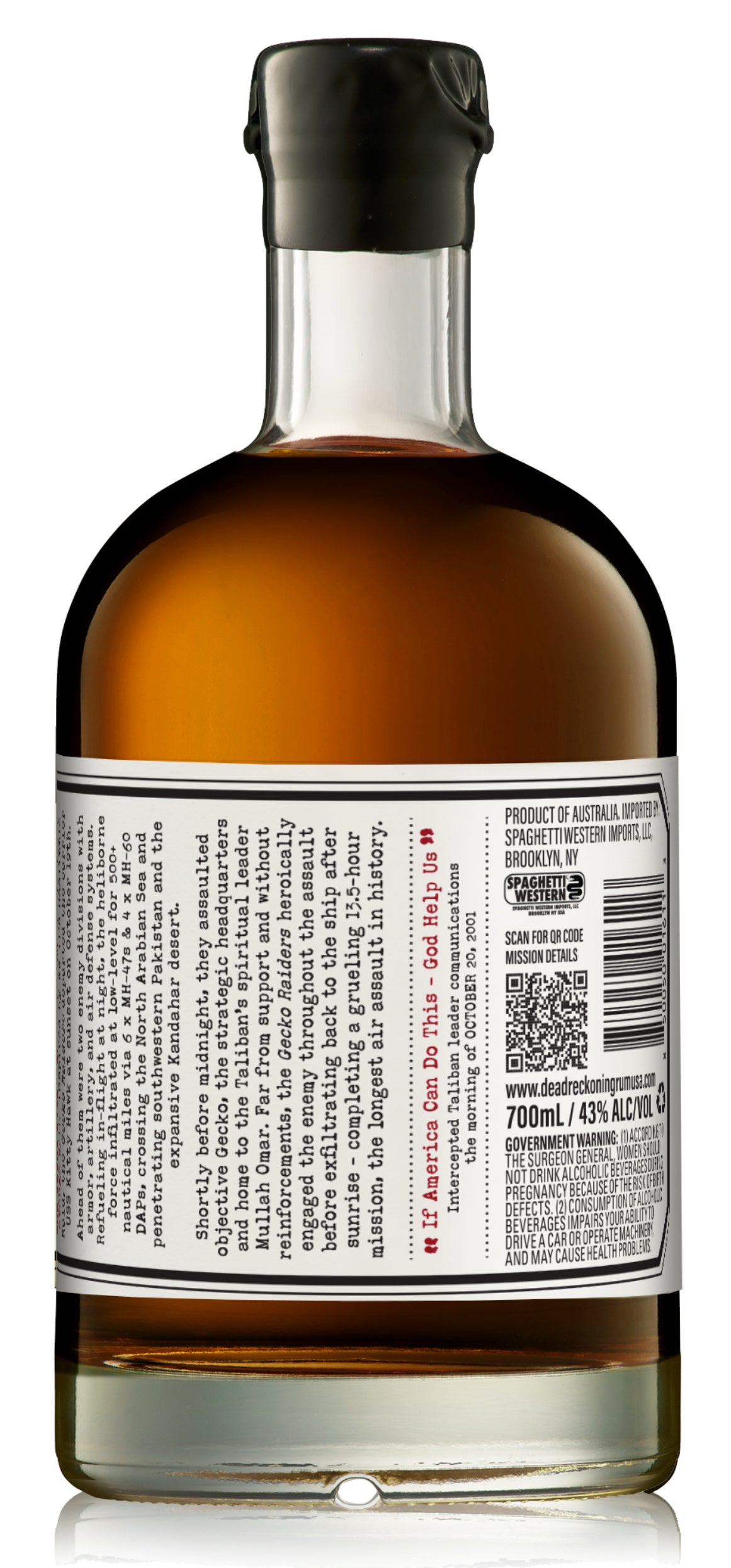
The purpose was to send an unequivocal message and the target selected to resonate it from was located 3 KMs northwest of Kandahar – designated objective Gecko. This large, high walled diamond shaped complex was 600m long x 300m wide and contained an inner catacomb-like sanctum with over 40 rooms and compartments, a separate mosque that served as a C2 node, and guard towers at the north and south entrances. The Taliban’s spiritual leader Mullah Omar called this place homeuntil 9/11, but he had not been seen there since. Omar was not expected to be on the target during the raid and his capture was not a criterion for success, but getting inside his sanctuary nearly half way around the world was.
Intel estimated two Taliban divisions in the Kandahar area with tanks, artillery, air defense systems and MANPADs, mechanized and wheeled mobility. The enemy was expected to be on and around objective Gecko, with the high potential for tanks with infantry to respond in 45-60 minutes, backed by heavy artillery. A manned ZSU-23-4 air defense system was set up 2km north of the objective, and a bunker complex was 200m to the northeast and elevated above the target. High ground to the east and west afforded the enemy with excellent firing positions.
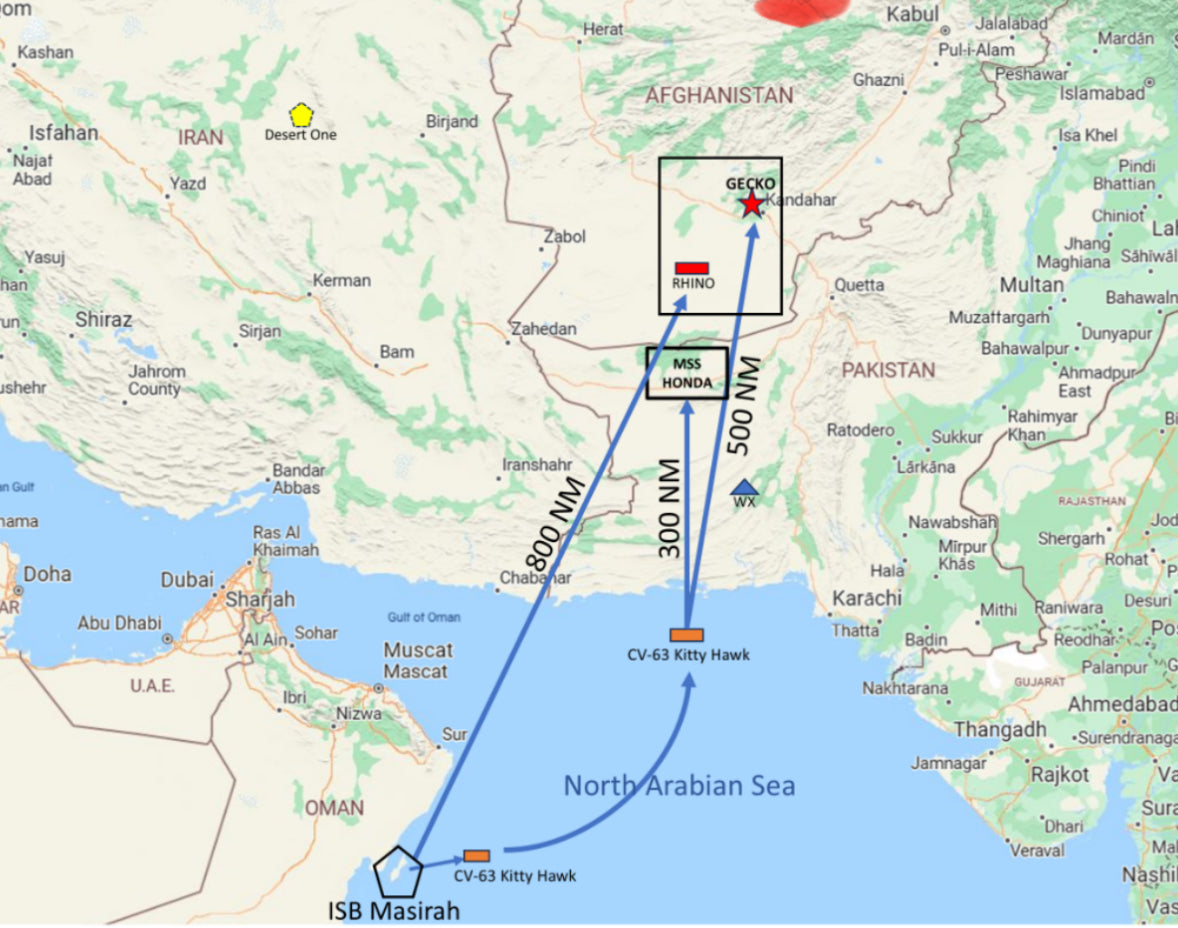
Extreme distances and environmental conditions shared similarities with operation Eagle Claw, as Gecko was just 400 nautical miles (NMs) southeast of Desert One. Likewise, the fixed wings would depart from Eagle Claw’s intermediate staging base (ISB) at Masirah Island, Oman while the helicopters would launch from an aircraft carrier and penetrate similar distances at low-level with scant illumination.
Given a national need to respond, there was no time for a full mission rehearsal. The joint force had limited planning at their respective home stations before deploying to the region. Once at the ISB, the force finalized the plan and conducted rock drills - relying on years of joint training relationships.
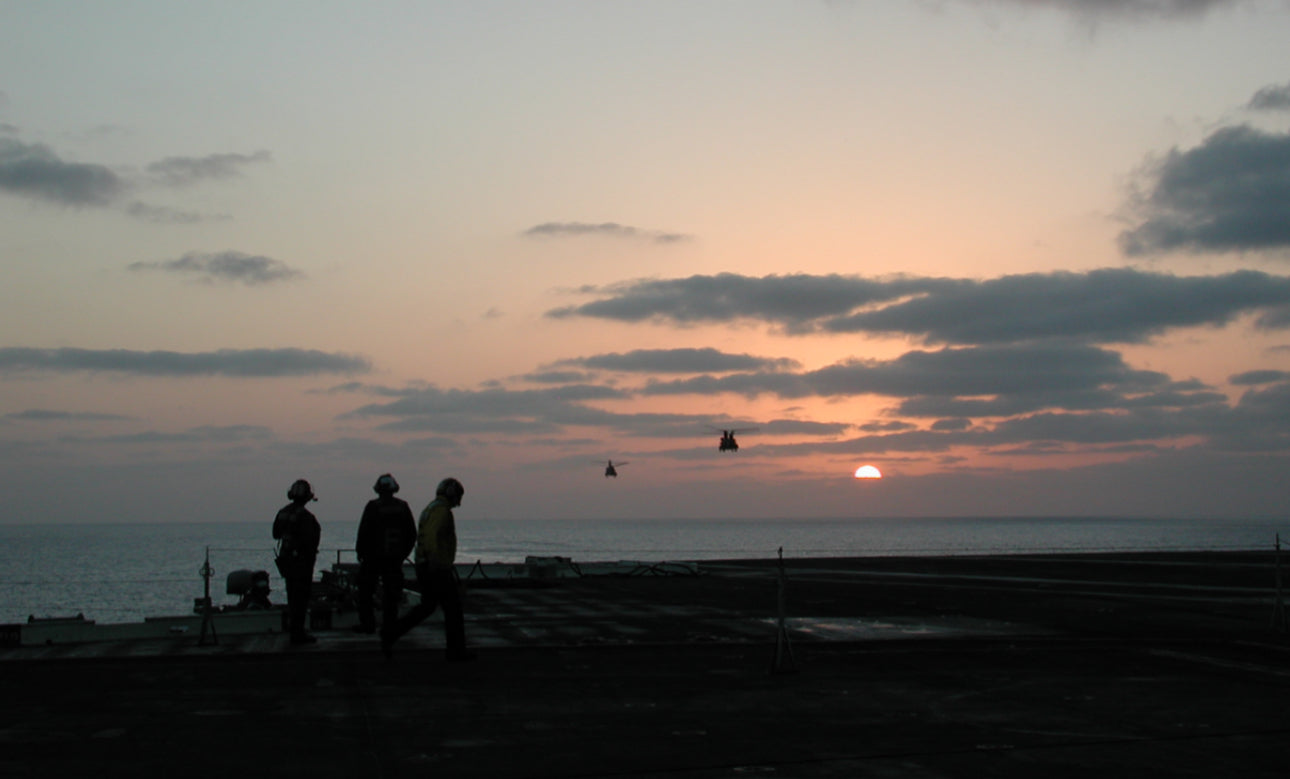
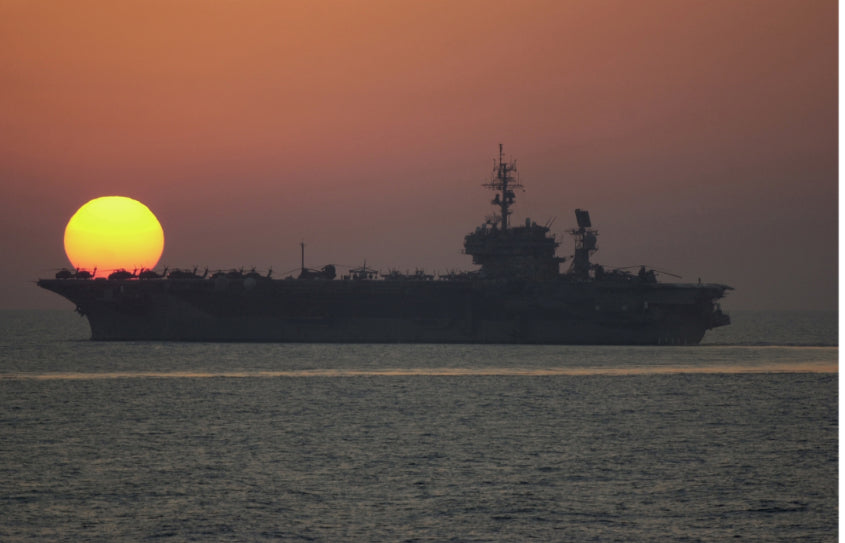
At sunset on 19 Oct 2001 the Gecko Raiders departed the USS Kitty Hawk and flew ~500 NMs north over the North Arabian Sea, across southern Pakistan and into Afghanistan, taking gas from MC-130s as they descended into the Kandahar desert. Enemy tanks were reported on the flight route and the Raiders offset and continued their approach. Just southwest of the target, bombers suppressed suspected enemy positions along a ridgeline and the MH-60 DAPs pulled ahead of the armada to their firing positions.
Meanwhile, the 75th Ranger Regiment (-) infiltrated 800 NMs on MC-130s and conducted a parachute assaultto seize objective Rhino, an airfield 70 miles southwest of Gecko. There, the Rangers established a forward arming and refueling point with medical transload capability. Elsewhere in the flow, a small mobility reserve of MH-60s with Rangers and USAF departed from the Kitty Hawk and pre-staged at mission support site Honda on the Dalbandin airfield in southern Pakistan; from Honda, they could support both objectives.
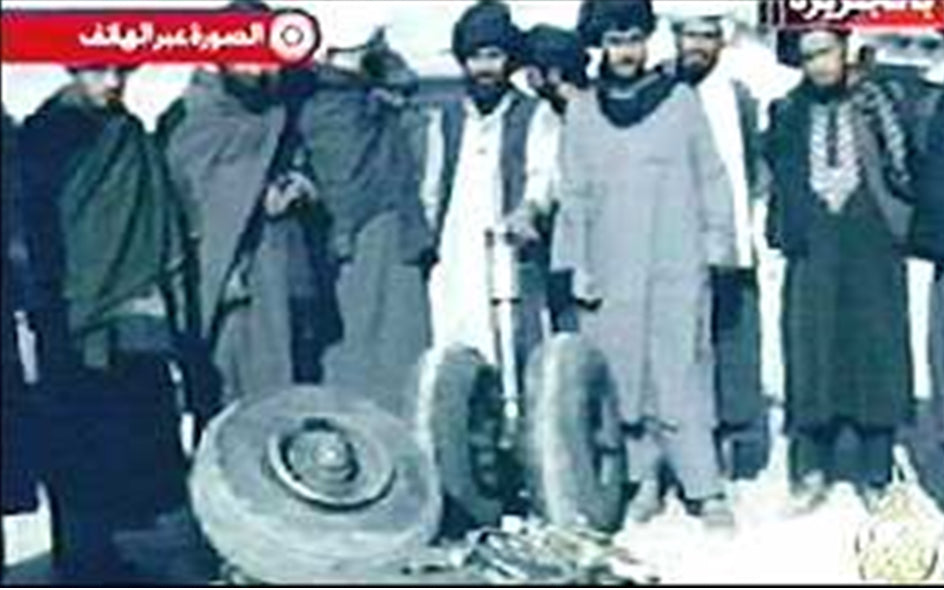
At the appointed time, the Gecko Raider MH-47s turned at the IP, crossed over the wall and landed in their designated landing zones. As the helicopters crossed over the wall their rotor wash kicked up dust and fanned the flames of an inner target hit by pre-assault fires. As a result, an MH-47, with its assault element still onboard, experienced brownout and night vision goggle washout – overshooting its LZ and impacting terrain with a force that sheared off its gear and compressed the rear ramp.
While this helicopter was limping out of the target area, the inserted ground force breached the inner sanctum and commenced the assault. Overwatch positions occupied rooftopsand began suppressing the bunker complex, all while AC-130s and MH-60 DAPs serviced pre-planned targets and on-call fire missions. Several minutes into the assault, the damaged MH-47returned to insert its assault element; they crawled through the small gap in the ramp and sprinted 100 meters to their breach points across an area that was already under fire.
The enemy fired continuously from a bunker complex to the north while other enemy forces attacked the Raiders from the high ground outside the east wall and to the south. The MH-60 DAPs bravely orbited above the force in full view and serviced call for fire missions on the bunker complex and enemy forces firing small arms and rocket propelled grenades (RPGs)from the high ground to the east and built-up area to the south. Overhead two AC-130s engaged enemy forces approaching the target complex in vehicles along the roads leading from Kandahar and dismounted troops in the open as they approached the target area.
The Raiders secured the target ‘on-time’ and prepared for exfil. As the MH-47s approached, the enemy hit them with small arms and RPGs – all helicopters had bullet holes and most received shrapnel. Upon landing, the ground force moved under direct fire to their helos while continuing to direct close air support. During departure, the MH-47s’ mini-guns suppressed the high ground while ground force personnel engaged the enemy from open aircraft windows and ramps.
The Gecko Raiders arrived at objective Rhino, assessed injuries and took gas. Eerilyreminiscent of Desert One, objective Rhino was a high dust environment. In a wise move to avert another national calamity, they adapted their plan and deftly departed south for a long flight back to the carrier.
Shortly after sunrise on the 20th, the Gecko Raiders arrived on the Kitty Hawk - Completing a grueling 13.5-hour helicopter flight - longest air assault in history.
/////////////////////////////////////////
The Gecko Raid was a strategic success and validated US special operations’ deep-strike capabilities, setting the stage for the long war that followed.
Intercepted Taliban senior leadership comms the next morning:
"If American Can Do This - God Help Us"
50% of all profits from the sale of each bottle will be donated to task force dagger special operations foundation helping veterans & families in need
https://www.taskforcedagger.org
700 ml 43%
A blend of Barbados, Australian & Sth pacific rums
Share
